
Envoy Video Shorts: We film as we roam, you learn wherever you wish.
Taking the work seriously, not ourselves.
Taking the work seriously, not ourselves.

80% of the idea we generate don’t have a chance of making it to the shortlist of workable ideas. Volume matters. We need to generate as many options as possible to increase the pool of options for decision-makers to stretch their perspectives and find the optimal solution. If the leaders of St Louis had limited the options they’d consider, we’d have a knock-off of Paris’ Arc de Triomphe instead of Eero Saarinen’s Gateway Arch. Go for scale. Embrace the ridiculous. Give yourself options.

We advocate for leaders to think about the nuance of the bottom line value of diverse teams. Beyond statements, what makes the difference?
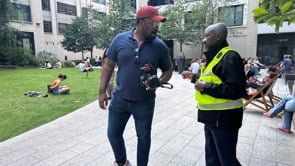
While the internet gives us access to almost limitless information, the decision architecture created by algorithmic nudges leads us to experience fewer and fewer perspectives and sources. To innovate, or to see different perspectives, we have to outflank the architecture of the technology stacks.
Lucy, in defence of facilitation in the round. If we remove the angles, we ensure eye contact, openness, and equality of views. Even better if we remove the table as a barrier between us. Making the case for getting away from the boardroom table and into the round.
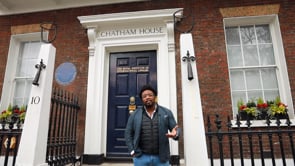
The challenge with “confidential” meetings is that - if we respect confidentiality - it’s hard to use the information discussed. At the other extreme, “on-record” meetings risk individuals not speaking their full opinions for fear of retribution. The “Chatham House Rule” navigates a middle-ground of non-attribution.
Try deploying the Rule when mediating a conflict, facilitating a leadership team, or bringing wary parties together to collaborate.

Challenging Assumptions Team Exercise:
Ask your group to list every assumption we typically make about the concept of a garden.
Play the video.
Break group into small teams and challenge them with generating ideas and designs for creating as many natural spaces as possible in urban environments.
Discuss the ideas.
Reflect on some of the assumptions that exist in your organization/industry.
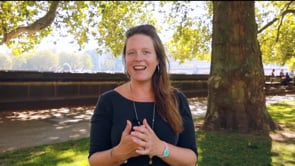
Deploying a “yes, and” mindset can be generative and generous to team members as you find new ideas to solve legacy and emerging problems. As much a way of living as a leadership tool, Lucy walks through the attributes of a “yes-ander” and finds a rather familiar stranger to volunteer to try the improv tool for shifting from closed to open thinking.

Why do we have ideas in the shower? The slight distraction of ambient noise. Thinking directly “at” a problem rarely generates creative solutions. Better to approach the challenge indirectly by providing a degree of distraction, allowing your mind to take alternative approaches to solutions. Whether walking, dancing, or paddleboarding… finding a distracted path to a solution can be more effective than taking a challenge head-on.
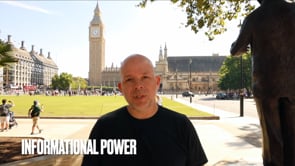
While we often feel powerless, we rarely are: we always have the option to shift to a different base of power. Drawing from French and Raven’s early work in defining types of power, Scott uses a single location in the heart of London to illustrate the four types of positional and four types of personal power that can be drawn on in negotiations and mediations.
While many of us default to brainstorming as an ideation technique, it’s arguably loaded with bias and limiting in the concepts it generates. Instead, consider Brainwriting.
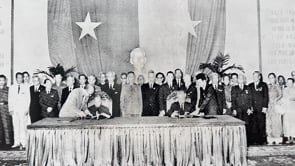
Symbols… artifacts… rituals… the keys to creating behaviors and culture. One of the easiest ways to appreciate them, is to observe those that run counter to your own perspective or history.